Why Your Dispensary App Is Becoming More Valuable Than Your Website

For years, a dispensary’s website carried most of the weight in digital strategy.
It helped customers find the store, check hours, view the menu, learn about products, and decide whether to visit. A strong website is still important. It is often the first place new customers land when they search for dispensaries nearby.
But the role of digital cannabis retail is changing.
Today, the bigger opportunity is often what happens after that first visit. Once a customer knows your store, likes your menu, joins your loyalty program, or places an order, the goal becomes simpler and more valuable: make it easy for them to come back.
That is where a branded dispensary app is becoming harder to ignore.
As more cannabis shopping moves online, digital convenience is now directly tied to revenue. Flowhub reports that 25% of all cannabis sales now happen online, and online orders have a 35% higher average order value than walk-ins. Online shoppers also add more items to their carts, with an average cart size of 3.9 items compared to 2.7 items for walk-in purchases, according to Flowhub’s cannabis industry statistics.
For dispensaries, that data points to a larger shift. The website helps customers find you. The app can help customers keep choosing you.
Dispensary Website vs. Dispensary App: Different Roles in the Customer Journey
A dispensary website still has an important job.
Customers use it to answer basic questions quickly:
- Where is the store?
- What are the hours?
- Is pickup or delivery available?
- What products are in stock?
- Are there deals today?
- Can I place an order before I arrive?
Those functions still count. A slow, outdated, or confusing website can create friction before a customer ever reaches the store.
But most websites are built around discovery. They serve people who are searching, comparing, browsing, and deciding. That makes them useful for acquisition.
A branded app serves a different purpose. It is built for customers who have already raised their hand. They have downloaded the app, created an account, joined loyalty, browsed the menu, or placed an order. That group is already closer to purchase.
Winning a new customer through search is valuable, but building a direct path back to an existing customer can be even more powerful.

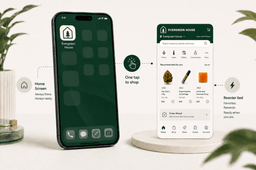
Why the Home Screen Is Valuable for Cannabis Retailers
A website waits for a customer to search.
An app sits on the customer’s phone.
That small shift can make a big difference in how often a customer thinks about your store. When a dispensary app is easy to use, it becomes a shortcut for shopping, rewards, reordering, and updates.
Customers do not have to remember the URL. They do not have to start with Google. They do not have to sort through competing dispensary listings, paid results, third-party directories, or outdated menu links.
They can tap the app and go straight to the store they already trust.
That direct access is especially valuable in cannabis, where retailers are working around advertising limits, crowded markets, price pressure, and inconsistent customer retention. The app gives dispensaries a way to keep the customer relationship closer without relying only on search visibility or discount-driven campaigns.
What Customers Expect From a Cannabis App
A dispensary app cannot simply exist. It has to earn its place on the customer’s phone.
The best apps make the next purchase easier. They reduce the steps between interest and checkout. They also give customers a reason to stay connected between visits.
Useful app features often include:
- Live menus with accurate inventory
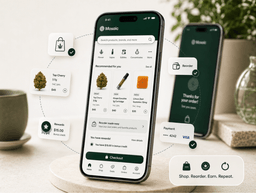
- One-click reordering for favorite products
- Loyalty points and rewards in the same place as shopping
- Personalized offers based on customer behavior
- Push notifications for timely updates
- Order-ahead options for pickup or delivery
- Digital payments or wallet functionality where available
- Easy access to order history
Flowhub’s cannabis industry statistics point to the same customer demand. According to the report, 75% of cannabis consumers want the ability to reorder with one click, 72% want to pre-order online, and 67% say delivery options are essential.
Those expectations are shaped by the rest of retail. Customers are used to ordering coffee, groceries, food delivery, prescriptions, and everyday essentials from their phones. Cannabis may be more regulated, but the customer’s patience for clunky digital steps is still limited.
Cannabis Loyalty Programs Work Better Inside the Shopping Experience
Loyalty should be easy to see, easy to understand, and easy to use.
Too often, dispensary loyalty lives in a separate system. A customer may earn points in one place, browse in another, pay somewhere else, and rely on staff to explain how it all connects.
That creates unnecessary friction.
When loyalty is built into the app experience, customers can see their rewards while they shop. They can understand what they have earned before checkout. They can connect the benefit of returning with the purchase they are making now.
That visibility can influence behavior in small but valuable ways. A customer may add another item to reach a reward threshold. They may reorder sooner because they see available points. They may choose your store over another because the value of returning is clear.
Flowhub’s 2026 4/20 data reinforces the importance of repeat customers. According to Flowhub’s 4/20 dispensary data, 85% of all 4/20 transactions came from returning customers, while 82% of 4/20 transactions included a discount.
Here’s what that data tells us: Discounts may bring energy to a high-volume sales day, but returning customers are already doing much of the work. A stronger app and loyalty experience can help retailers reward those customers with more precision instead of treating every shopper the same.

Owned Cannabis Marketing Channels Are Becoming More Important
Cannabis retailers do not have the same marketing freedom as traditional retailers.
Rules vary by state, platforms can be unpredictable, and public discount advertising may be limited or restricted. In Connecticut, for example, regulators clarified that cannabis discounts may only be offered inside a licensed establishment or online after a customer’s age has been verified, according to CT Insider.
That kind of environment makes owned digital channels more valuable.
A branded app gives dispensaries a more direct way to communicate with customers who have already opted into the relationship. Push notifications, loyalty updates, product announcements, and personalized offers can be delivered in a more controlled environment, with compliance and customer consent built into the strategy.
The key is relevance.
A push notification should feel useful, not random. A loyalty offer should feel connected to how the customer shops. A product recommendation should come from actual customer behavior, not guesswork.
The stronger the data behind the app, the better those interactions can become.
How a Branded Dispensary App Connects Menu, Loyalty, Payments, and Data
A dispensary app becomes more valuable when it is connected to the rest of the retail experience.
That means the app should not operate as a standalone tool that sits apart from the menu, loyalty program, payments, marketing, and customer data. When those systems are disconnected, customers feel it.
They may see a product online that is out of stock in-store. They may earn rewards they cannot easily redeem. They may start an order and abandon it because payment or pickup instructions are unclear. They may receive a promotion that does not match what they actually buy.
For employees, fragmentation creates its own problems. Staff may have to troubleshoot accounts, explain missing rewards, reconcile order issues, or help customers move between systems that should already be connected.
A stronger app experience brings the pieces together:
- Menu browsing
- Online ordering
- Loyalty
- Customer engagement
- Payments
- Data and analytics
Mosaic positions its platform around this need, bringing branded apps, online ordering, loyalty, payments, and customer data into one connected retail experience.
For dispensaries, that connected approach can make the app more than a digital storefront. It becomes part of how the business understands customers, drives repeat orders, and strengthens the overall shopping experience.
How Dispensaries Can Drive App Adoption
Retailers do not need every customer to download the app on day one.
A smarter starting point is the customer base that already has a reason to engage.
Loyalty members. Frequent buyers. Online ordering customers. Customers who ask about deals. Customers who regularly reorder the same products. Customers who prefer pickup or delivery.
These shoppers already have habits the app can support.
A budtender can invite them to download the app so they can track points more easily. A receipt can include a QR code. A loyalty email can explain the benefit of ordering through the app. A first app-only offer can encourage adoption without relying on a deep storewide discount.
The goal is useful adoption.
A customer who downloads the app, browses once, and never returns does not create much value. A customer who uses the app to reorder, track rewards, respond to relevant offers, and shop more often is a different story.
What to Look for in a Dispensary App Platform
A dispensary app should make shopping easier for customers and operations clearer for the retailer.
Before investing in or re-evaluating an app, operators should look closely at how it supports the full retail experience.
Can customers shop quickly?
The menu should be easy to browse, search, filter, and reorder from.
Is loyalty visible during shopping?
Customers should be able to see points, offers, and available rewards without asking staff or switching platforms.
Does the app support compliant engagement?
Push notifications and promotions should be built with opt-in customer communication and cannabis regulations in mind.
Can the retailer access useful customer data?
The app should help operators understand browsing behavior, order patterns, loyalty activity, and conversion.
Does it connect with payments?
When digital payments or wallet options are available, they should reduce friction for customers and staff.
Does the app reflect the dispensary’s brand?
A branded app should feel like the retailer’s own experience, not a generic marketplace where the customer relationship is shared or diluted.
The Future of Cannabis Retail Is Direct Customer Engagement
Websites will continue to play an important role in cannabis retail.
They help new customers find the store. They support local search. They make basic information accessible. They give dispensaries a public-facing digital presence.
But the next phase of cannabis retail will put more emphasis on direct customer relationships.
That means giving customers easier ways to return. It means making loyalty more visible. It means connecting digital ordering with payments and customer data. It means reducing the friction between browsing, buying, earning rewards, and coming back again.
A branded app helps dispensaries move closer to that future.
For customers, it creates convenience.
For operators, it creates visibility.
For the business, it creates a stronger path to repeat revenue without relying only on search, third-party platforms, or blanket discounts.
The dispensary website may still earn the first click. The app can help earn the next visit.


